
Update 1: 750Nm on tap! That’s not a typo
The first number that jumps out in the Tank’s specs is the torque figure. 750Nm! It sounds like a typo, but it isn’t.
GWM has given us the Tank 300 Ultra PHEV to test. It combines a 2.0-litre turbo-petrol four-cylinder engine with an electric motor to produce a claimed 300kW and 750Nm. For comparison, that’s the same torque figure as a Defender OCTA with its 4.4-litre twin-turbo V8. The difference is the OCTA costs somewhere around $300,000, while the Tank 300 PHEV is priced at $61,990.
GWM has also done quite a bit of Australian development work on the 300. Leading that work is Rob Trubiani, GWM Australia and New Zealand’s lead engineer and a former Holden vehicle dynamics engineer. Rob has years of experience tuning cars for local conditions, and he is very good at his job. As soon as I hopped in the Tank, I could tell it had benefited from his input.
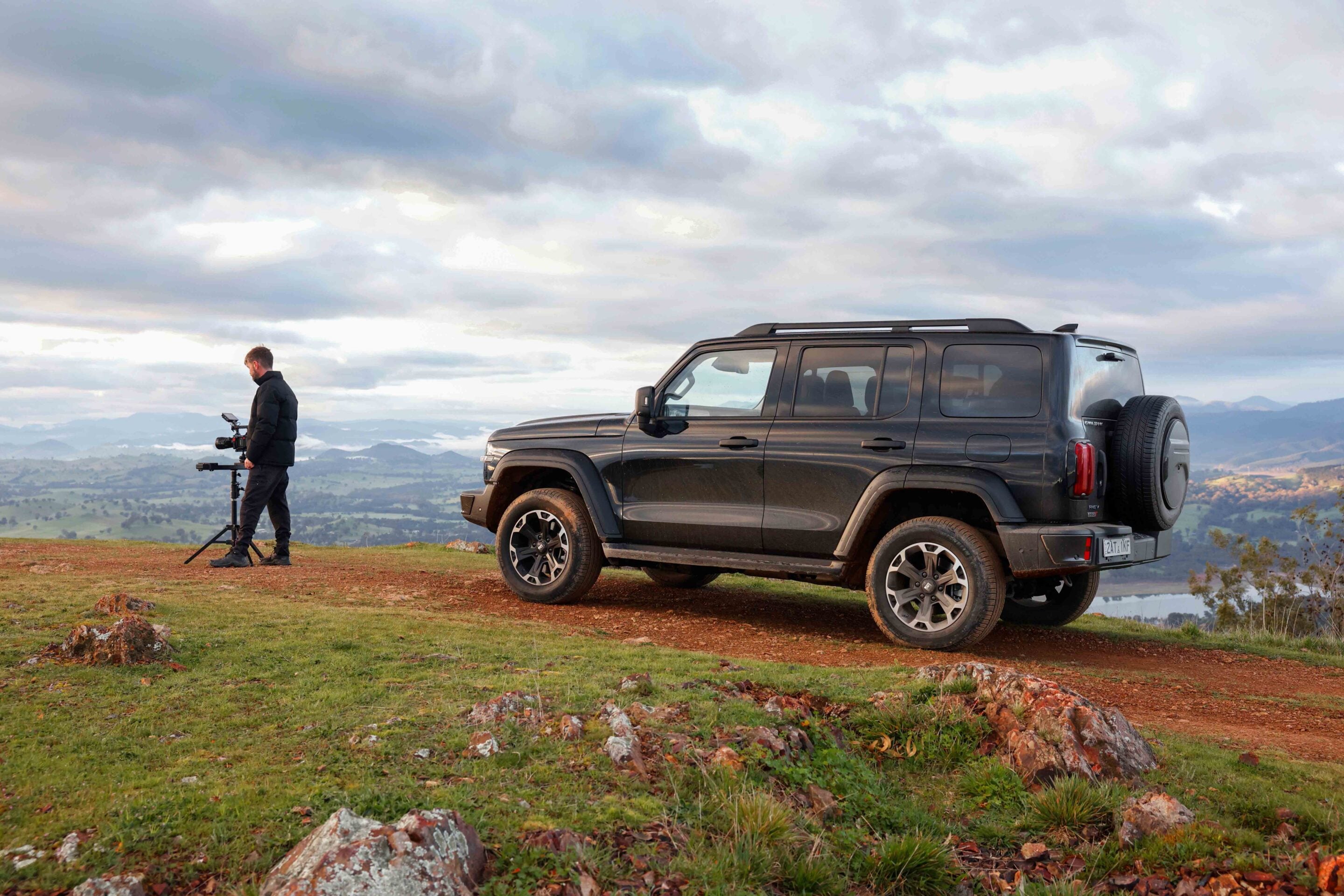
The local work is extensive, with steering calibration, suspension tuning and a dedicated Tow Mode among the changes made to better suit Australian conditions.
I picked up the Tank and headed straight for the Jamieson-Mansfield High Country. We had a RAM off-road shoot on, so the Tank’s first trip was going to be a working one. I loaded it with camera gear and headed north.
The highway run gave me a chance to start working out how the hybrid system operates. There are three main drive settings, allowing you to run in full EV, hybrid or Smart mode, with the latter managing the petrol and electric systems and charging the battery as you drive.
This was my first proper stint in a plug-in hybrid, and there is a fair bit to get your head around. Which mode is best for fuel economy? Which gives you the most power? When should you save battery and when should you use it? I was still working all of that out on the way up.
There were a few other things to discover as well. At one point I managed to hit a button and the driver’s seat started giving me a massage. Not a bad accidental find. The heated steering wheel and seats were also welcome heading into the High Country, and at 6ft 2in I had no trouble getting comfortable in the driver’s seat. Visibility out of the Tank is good, helped by a fairly upright windscreen, much like that of a Wrangler or Grenadier.
One thing I’m not completely sold on is the styling. From some angles the Tank looks a little awkward. I think a bigger set of off-road-specific tyres mounted on smaller rims with a more aggressive offset would improve the look considerably and also add to its off-road ability. A lift kit wouldn’t hurt either.
Once I left the highway, it was time to put the four-wheel-drive system to use for the first time. I turned the rotary dial to 4H and hit the dirt. On rougher tracks, the Tank’s ride remained comfortable and well controlled. It has decent suspension travel, which helps soak up the bumps and keeps the vehicle composed when the track starts to get uneven. Another handy feature is the 240-volt outlet in the load area. With a full day of shooting ahead, I was able to charge my camera batteries while we were on the move.
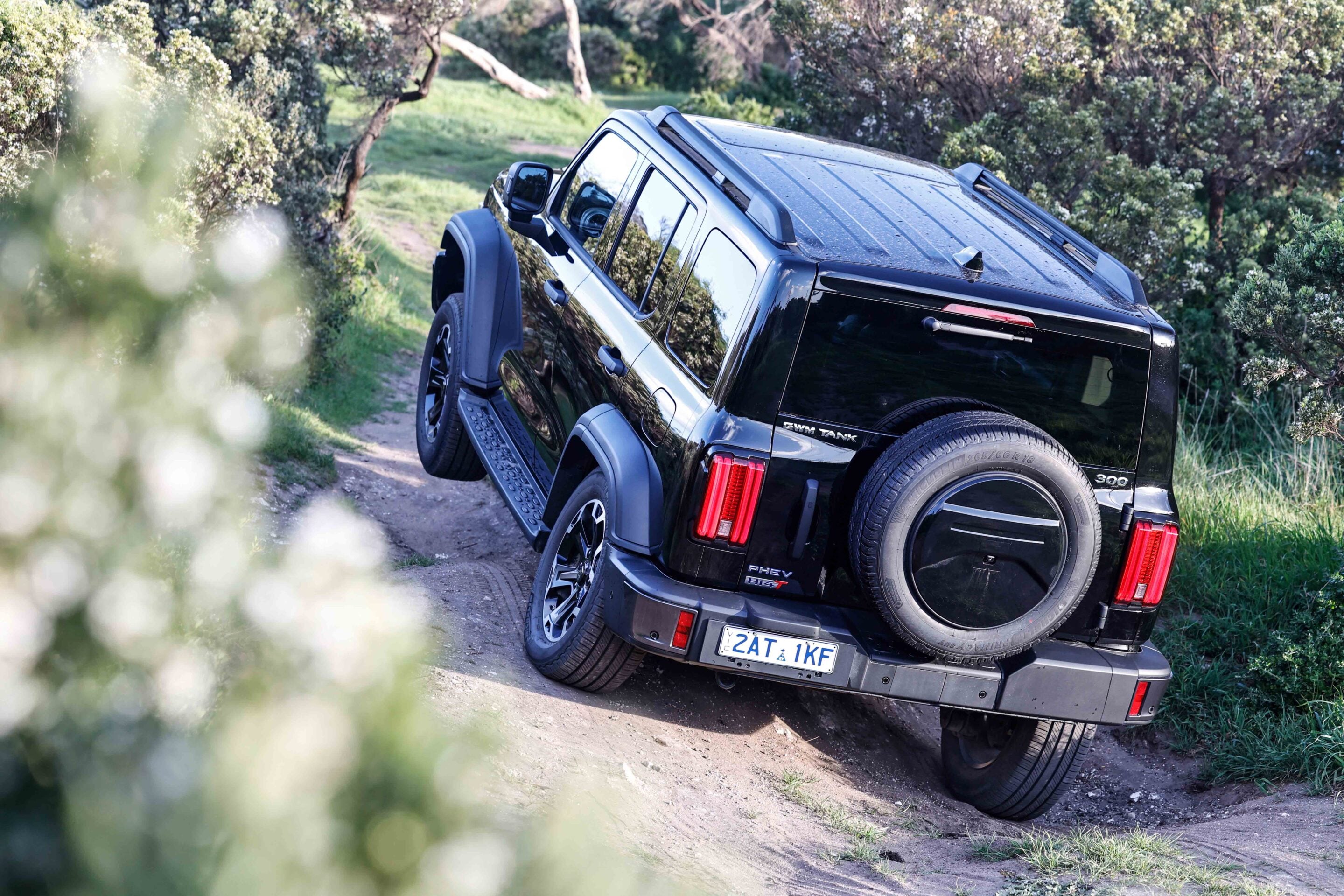
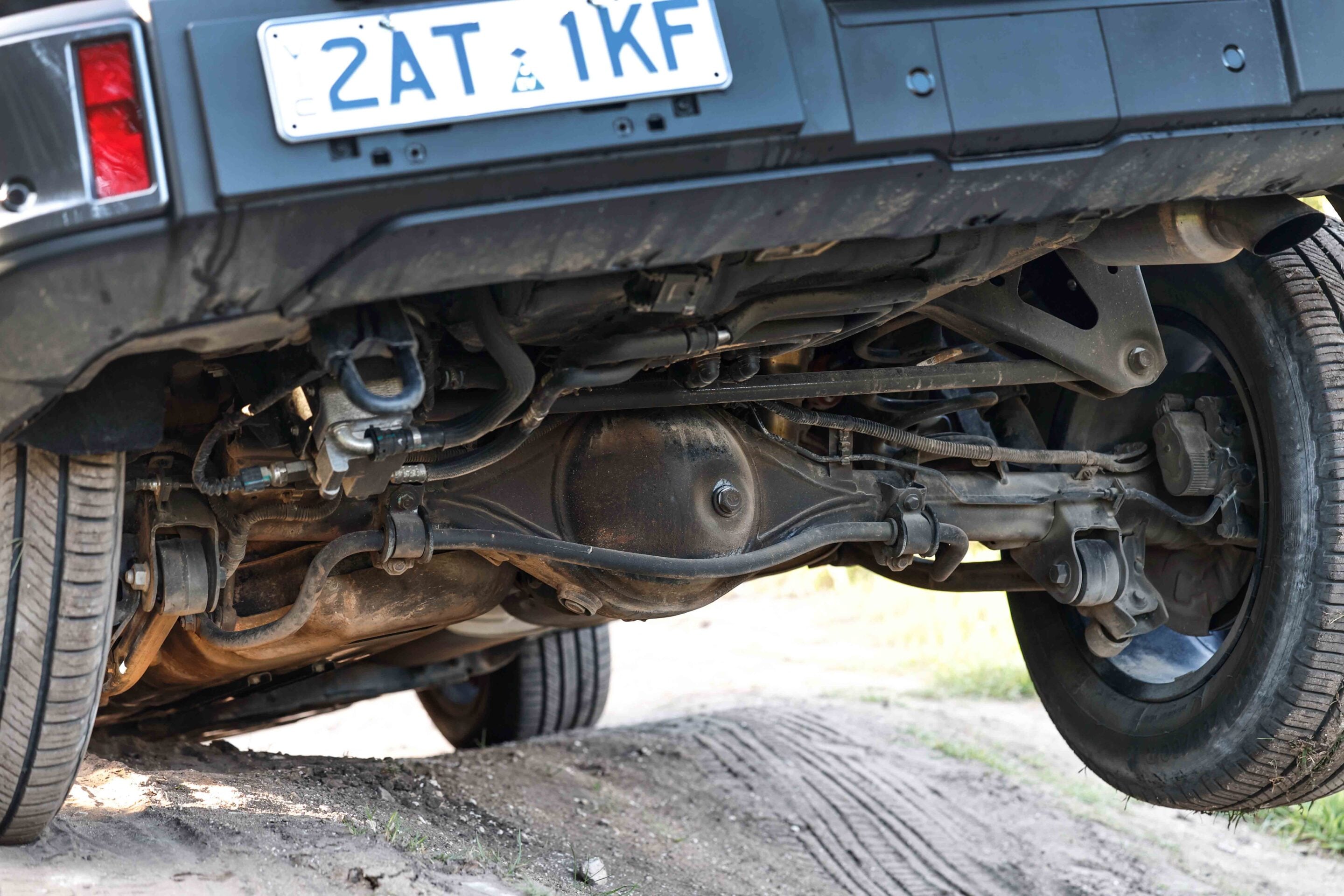
I was also surprised by how much articulation the suspension has, particularly at the rear. Back at one of my favourite local off-road spots, I tried the front and rear diff locks on a short, steep section. With both engaged, the Tank crawled up without any trouble. It does tend to lift a front wheel off the ground, but with the diff locks engaged, it just keeps moving forward.
What surprised me most was that it managed this on highway tyres. Imagine what it could do with a good set of all-terrains. There are still plenty of features I haven’t properly tested, including the intriguingly named Tank Turn button.
I’m looking forward to testing the Tank further next month. I might have to find some more challenging tracks, as it’s already proving more capable than I first thought. And I probably need to press that button.
- Kilometres this month: 3240km
- Average fuel use: 8.1L/100km
- Price: $61,990 drive away
- Price as tested: $62,585
Specs
| Specification | GWM Tank 300 PHEV |
|---|---|
| Engine | Turbocharged petrol engine with electric motor |
| Max Power | 120kW (electric motor); 180kW @ 5500-6000rpm (petrol); 300kW combined |
| Max Torque | 400Nm (electric motor); 380Nm @ 1700-4000rpm (petrol); 750Nm combined |
| Transmission | 9-speed automatic |
| 4×4 System | Part-time dual-range 4×4 |
| Construction | 5-door wagon on ladder-frame chassis |
| Front Suspension | Independent front suspension with wishbones and coil springs |
| Rear Suspension | Live axle with links and coil springs |
| Tyres | 265/65R18 alloy wheels |
| Kerb Weight | 2615kg |
| GVM | 3225kg |
| Payload | 610kg |
| Towing Capacity | 3000kg (braked) |
| GCM | 6261kg |
| Seating | 5 |
| Fuel Tank | 70L |
| ADR Fuel Consumption | 0.9L/100km (combined); 8.3L/100km (battery low charge) |
BLUETTI (↗) has opened early access for its new Apex 200 portable power station (↗), designed for home emergency backup, caravan travel and off-grid use.
Building on the larger Apex 300, the new Apex 200 (↗) brings the same modular approach into a more portable 2.56kWh package, weighing 26.9kg. It combines 2560Wh of LFP battery capacity with 3.2kW of AC output, rising to 3.6kW under select conditions.
Storage can be expanded as power requirements grow, with compatible expansion batteries taking a single unit up to 33.28kWh. Up to three units can also be connected in parallel, delivering up to 10.8kW of combined output and approximately 100kWh of total storage.
Portable power for 4WDs, caravans and camping
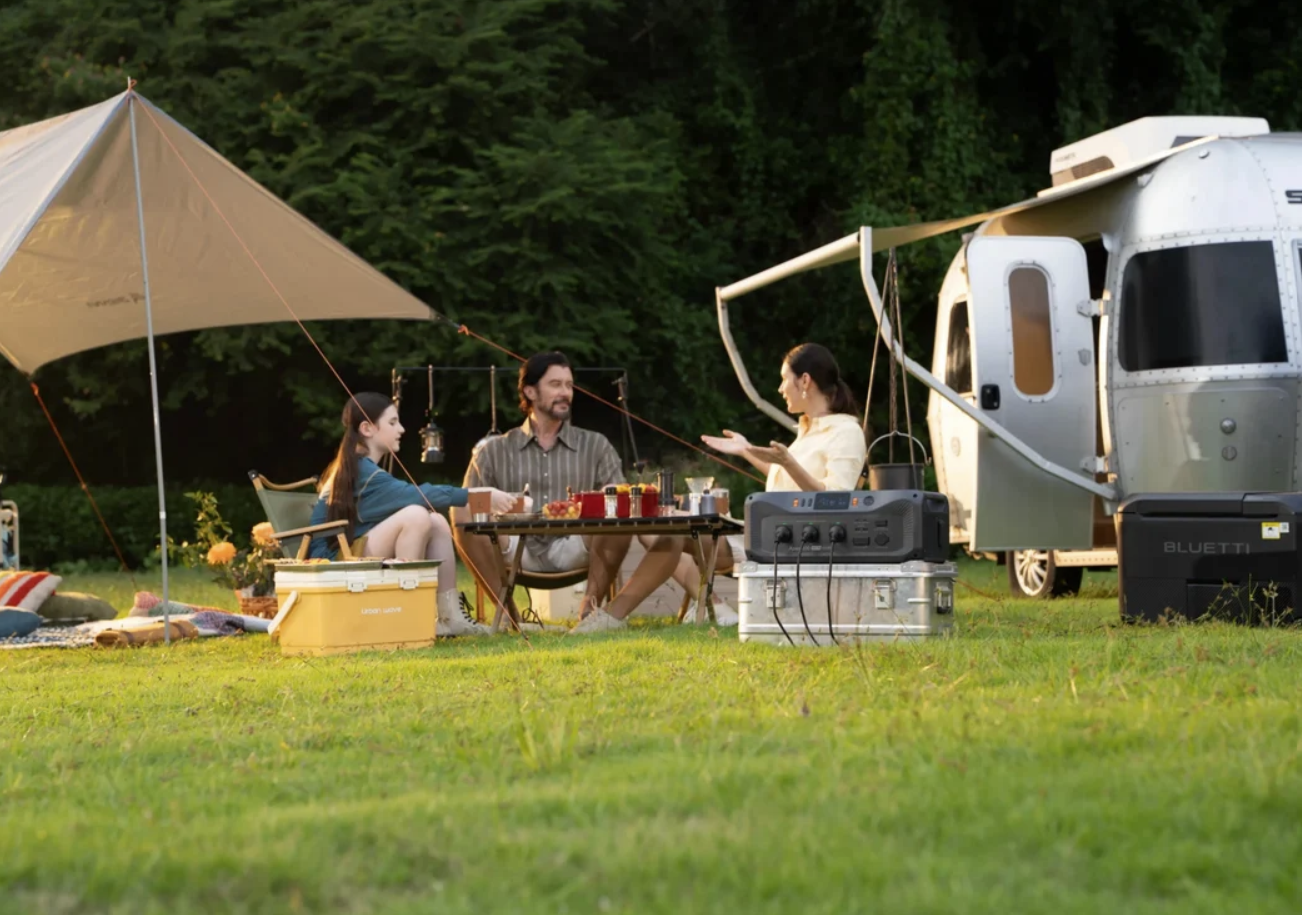
The Apex 200 has nine output ports, including three individually controllable smart AC outlets, a 12V/10A cigarette lighter port and a 12V/30A Anderson port.
For caravan and camping setups, the three 15A AC outlets provide connections for RV and camping equipment, while the Anderson port allows compatible 12V appliances to be powered directly without conversion losses.
The 26.9kg unit measures 36.2 litres in volume, giving it a more portable footprint than larger backup systems while retaining plenty of capacity for touring and off-grid use.
Expandable backup power for home and off-grid use
The Apex 200’s standalone 3.2kW output can support household essentials such as refrigeration, lighting, Wi-Fi and home connectivity during power outages.
Adding B300K or B500K series expansion batteries (↗) extends operating time, with a fully expanded single system capable of reaching 33.28kWh. For larger backup requirements, up to three fully expanded Apex 200 systems can be connected in parallel using the HUB A1 (↗), delivering up to 10.8kW of output and approximately 100kWh of combined storage.
Solar charging is also supported, with up to 3000W of 450V high-voltage solar input helping replenish the system during extended outages or off-grid use.
BLUETTI Apex 200 early access and pricing
Early-access registration for the Apex 200 (↗) opened on November 9.
Subscribers can receive early access to pricing information ahead of launch and enter a spin-to-win promotion for purchase-redeemable rewards, including an A$200 discount. Final Australian pricing will be announced when the Apex 200 officially launches on November 24.
BLUETTI is rolling out its Black Friday deals (↗) in Australia, with discounts of up to 59 per cent across its portable power stations, solar panels and accessories.
Running from November 19 to 30, the sale covers several models aimed at campers, caravanners, 4WD owners and households wanting backup power during outages. There are also bundle deals combining power stations with solar panels and charging accessories, along with a new model joining the range.
The Apex 200 (↗) launches on November 24, while anyone who misses the main sale will get another chance to save during BLUETTI’s Cyber Monday promotion, running from December 1 to 5. Discounts will be smaller during the follow-up sale.
New Apex 200 joins the range
The new Apex 200 (↗) arrives on November 24, offering a 2.5kWh capacity in a relatively portable 26.9kg package. Sitting alongside the larger Apex 300, it can be expanded to a claimed 100kWh as power requirements grow.
It also supports up to 3kW of solar charging, has three 15A AC outlets for shore power and camping equipment, and includes an Anderson port for connecting to caravan and 4WD setups. The Apex 200 will be available during the Black Friday promotion, with special launch pricing.
Best BLUETTI Black Friday power station deals
There are several portable power stations and bundles included in the sale, from compact units suited to weekend camping through to larger systems designed for extended off-grid use and home backup.
The Elite 300 delivers 2.4kW of power from a 26.3kg package. At an unpowered campsite, it can run a 12V fridge, Starlink, laptops and a coffee machine, while at home it can help keep a chest freezer and lights running during a power outage.
Available deals include:
- Elite 300 (↗) ($2499): Standalone portable power station.
- Elite 300 + Charger 2 (↗) ($2899): Adds faster charging when travelling between camps.
- Elite 300 + 500W Solar Panel (↗) ($3499): Includes a free Elite 10 for smaller devices such as phones and camp lights.
The Elite 200 V2 offers 2kWh of capacity in a compact package suited to weekend camping, beach trips and touring. It uses EV-grade LiFePO4 battery cells, with BLUETTI claiming more than 17 years of potential use. It can recharge in as little as 1.5 hours and run a 50W portable fridge for more than 26 hours.
Available deals include:
- Elite 200 V2 (↗) ($1699): Standalone unit for camping and campervan use.
- Elite 200 V2 + Charger 1 (↗) ($1899): Adds an additional charging option for touring and travel.
- Elite 200 V2 + 220W Solar Panel (↗) ($2199): Combines portable power with solar charging for off-grid camping.
For those needing more capacity, the Apex 300 delivers 3.84kW of output and can accept up to 19.2kW of solar input when paired with BLUETTI’s SolarX 4K. Expansion batteries can also be added to increase storage capacity. It’s aimed at larger off-grid setups, remote properties and households wanting more backup power during storms and outages.
Available deals include:
- Apex 300 + B300K (↗) ($4598): Includes a free 200W solar panel and doubles storage capacity to around 5.5kWh for longer periods off-grid.
- Apex 300 + Hub D1 (↗) ($3198): Includes a free Elite 10 and adds USB-C, 12V and Anderson connections for camper trailer and shed setups.
- Apex 300 + 350W Solar Panel (↗) ($3699): Includes a free Elite 10 and provides another way to recharge using solar.
Other BLUETTI deals worth a look
There are a few more products included in the Black Friday promotion, including smaller portable power options and larger units designed for home backup.
- Elite 100 Mini (↗) (29% off): Launched earlier in November, this compact unit packs 1kWh of capacity and has a built-in LED light. It’s aimed at weekend camping and smaller power requirements on the move.
- Elite 400 + Charger 2 (↗) (17% off): Features a wheeled design, 3840Wh capacity and 3900W of lifting power. It’s designed for home backup, caravan trips, outdoor work and off-grid use.
- FridgePower (↗) (28% off): Features a slim 75mm design, 1800W output (3600W surge) and expandable capacity up to 8064Wh. It’s designed to keep fridges and other essential appliances running during extended outages.
Exclusive 4X4 Australia discount codes
There are additional incentives for Australian buyers during the promotion, including free gifts, a lucky draw and extra savings on accessories. We’ve also secured three exclusive discount codes for 4X4 Australia readers, offering further savings across BLUETTI’s portable power range.
Exclusive 4X4 Australia discount codes:
- 4X4BFCM6 (6% off): Elite 100 Mini, Elite 300 and FridgePower Series products.
- 4X4BFCM8 (8% off): Apex 200, Apex 300 and Elite 400 Series products.
- 4X4BFCM5 (5% off): All BLUETTI products.
There are also several sitewide Black Friday incentives:
- Spend $3000: Receive a free Elite 10, valued at A$279.
- Spend $4000: Receive a free 200W solar panel, valued at A$699.
- Lucky draw: Every A$1000 spent earns an entry to win an Elite 10, 1000 BLUETTI Bucks or discount coupons of up to 15 per cent on selected products.
- New subscribers: Can access coupons offering between 5 and 8 per cent off.
- Triple BLUETTI Bucks: Earn three times the usual BLUETTI Bucks on every dollar spent through the official website during the sale.
- Accessories: Receive an additional 10 per cent off sitewide accessories.
The free gifts are limited in quantity and available on a first-come, first-served basis while stocks last.
The main BLUETTI Black Friday sale (↗) runs from November 19 to 30, followed by the Cyber Monday promotion from December 1 to 5. For the full range of deals and bundle options, visit the official BLUETTI Australian website (↗).
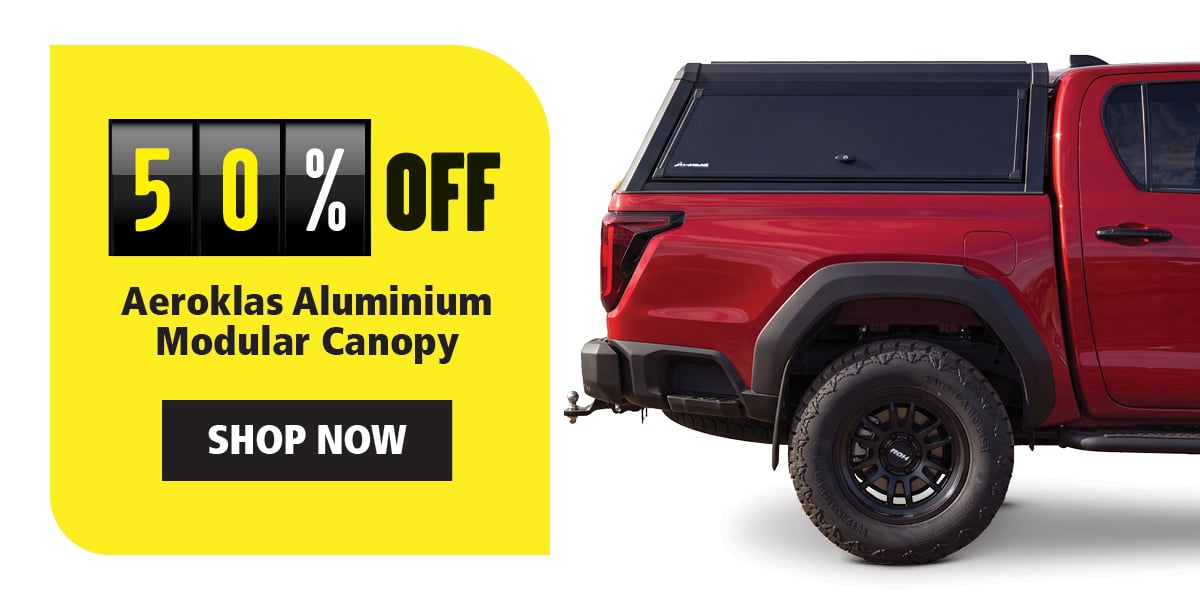
TJM is serving up some serious Black Friday savings (↗), headlined by 50 per cent off Aeroklas Black Aluminium Canopies.
Running from November 17 to December 1, the promotion covers a stack of 4×4 accessories and touring gear, including 25 per cent off TJM Outback and Venturer bull bars, XGS suspension and selected driving lights.
There are also free accessory bundles on selected canopy, roof rack, air compressor and awning purchases, giving 4×4 owners plenty of opportunities to save on their next build or touring setup.
Half-price Aeroklas canopies
The standout deal is 50 per cent off Aeroklas Black Aluminium Canopies, making this one of the bigger savings in the TJM Black Friday promotion. There are more canopy offers, too, with free roof racks and a rooftop tent available with selected Aeroklas purchases.
- 50% off Aeroklas Black Aluminium Canopies
- Buy a selected Aeroklas Stylish or Injecta Canopy and receive a free Aeroklas Universal Roof Rack
- Buy an Aeroklas Flexisport or Essential Canopy and receive a free TJM Windorah Rooftop Tent
- 20% off Bocar trays
Save 25 per cent on TJM protection and suspension
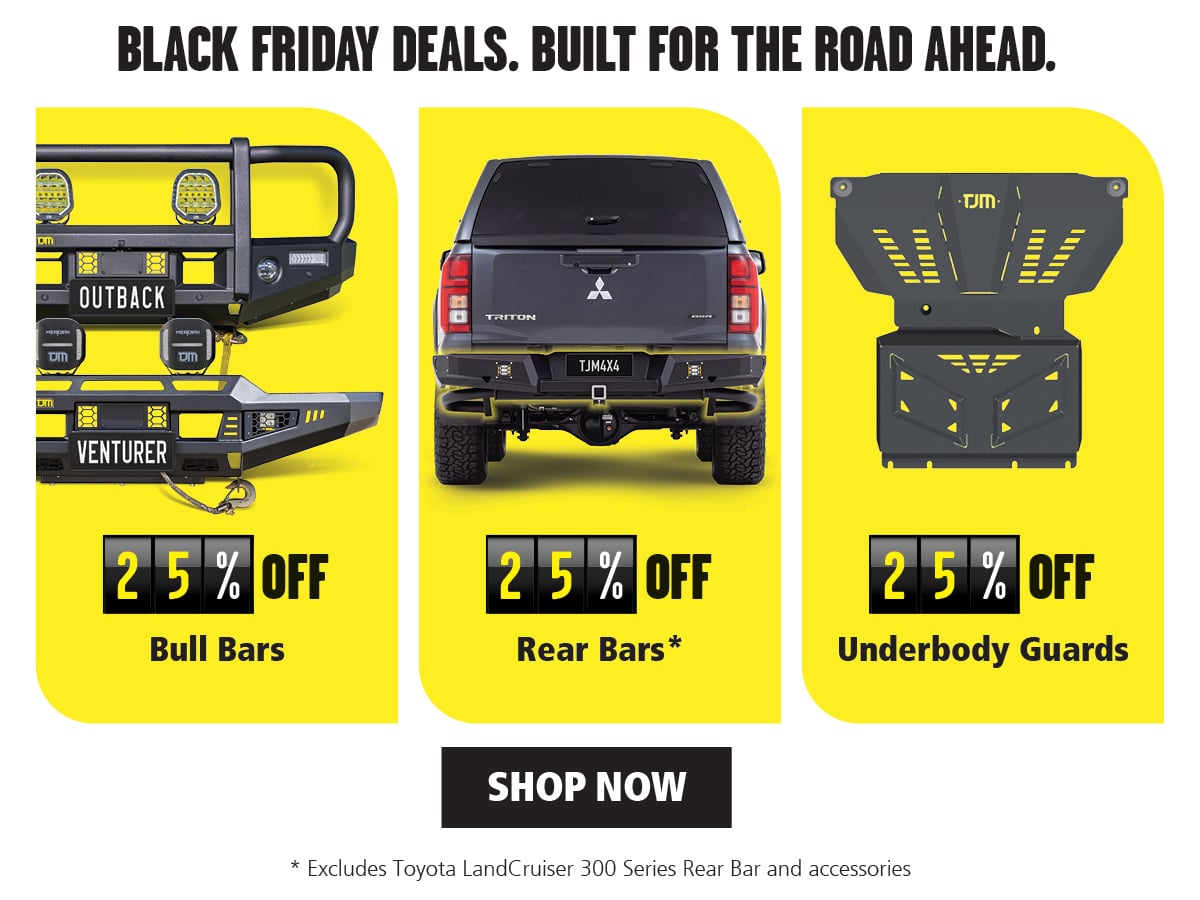
TJM is offering 25 per cent off its Outback and Venturer bull bars, XGS suspension and selected driving lights. It’s worth thinking about the bigger picture when fitting a bull bar, though. Once accessories such as driving lights and winches are added, the extra weight can have an impact on front axle loads and overall payload. It’s something to factor into your build before heading off on a touring trip.
- 25% off TJM Outback and Venturer bull bars
- 25% off TJM XGS suspension and upper control arms (UCAs)
- 25% off select TJM driving lights
- TJM Meridian driving lights excluded
Save on roof racks, awnings and camping gear
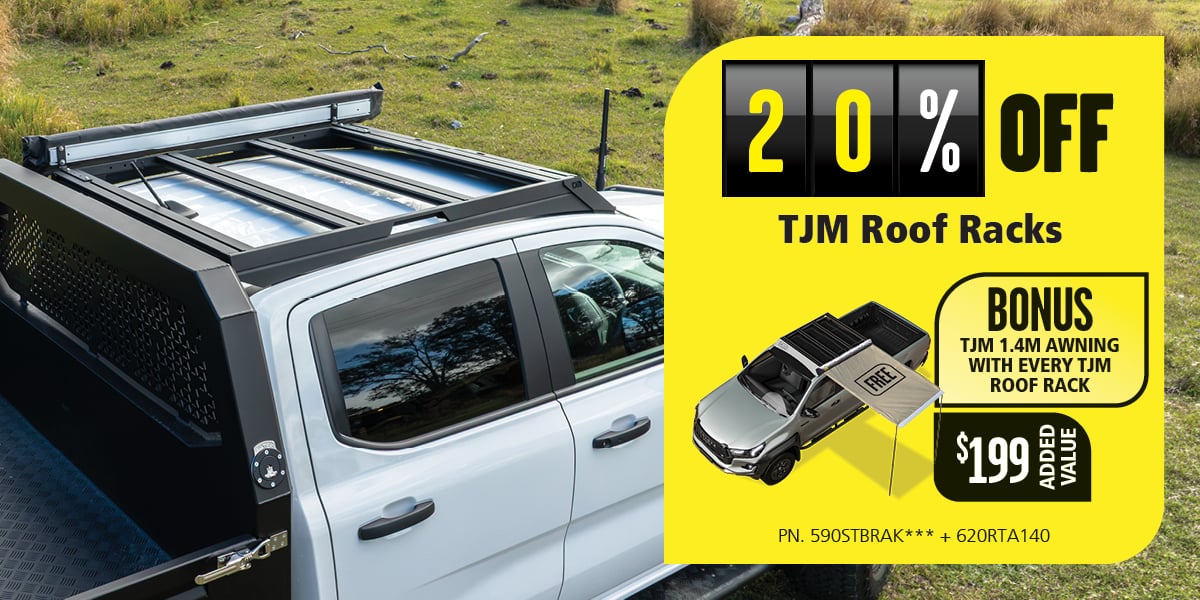
There are some handy touring deals in the promotion, particularly if you’re looking to add shade or upgrade your campsite setup. TJM is discounting its roof racks and offering free accessories with selected awning purchases.
- 20% off TJM roof racks, plus a free 1.4m awning
- Buy a TJM 180-degree or 270-degree awning and receive two camp chairs and one folding stool free
- Buy a TJM 2m or 2.5m awning and receive a matching awning room free
Free air tanks with TJM compressor bundles
TJM is also offering free 2.5-litre air tanks with selected air compressor purchases, adding a handy extra to either compressor setup.
- Buy a TJM twin compressor and receive a free 2.5-litre air tank
- Buy a TJM single compressor and receive a free 2.5-litre air tank
The TJM Black Friday promotion (↗) runs from November 17 to December 1, with deals available through participating TJM stores.
As the interiors of new 4×4 vehicles become more luxurious, with big screens and heaps of features, finding space for storage and mounting accessories has become a challenge.
Even finding a flat surface to fit a switch for your driving lights or a place to mount the UHF handpiece can be difficult in some new vehicles. Our 2026 HiLux SR5 was no exception.
4WD Interiors, formerly Outback Interiors, has been developing solutions for the cabins of four-wheel drive vehicles for more than 40 years. Even though the cabins in the old Cruisers, Patrols and Land Rovers were much simpler places back in those early days, the concept remains the same: to develop and offer interior solutions for four-wheel drive vehicles.
From roller drawers to roof shelves, door pockets and everything in between, 4WD Interiors has storage solutions for any four-wheel drive.
Making use of wasted cabin space
We rolled our 2026 HiLux SR5 into 4WD Interiors’ new Melbourne workshop to have one of the company’s roof consoles fitted.
If there’s one area of available space within the confines of a midsize double-cab ute, it’s along the roof between the heads of the front-seat occupants. 4WD Interiors has developed its roof console to make that empty space useful.
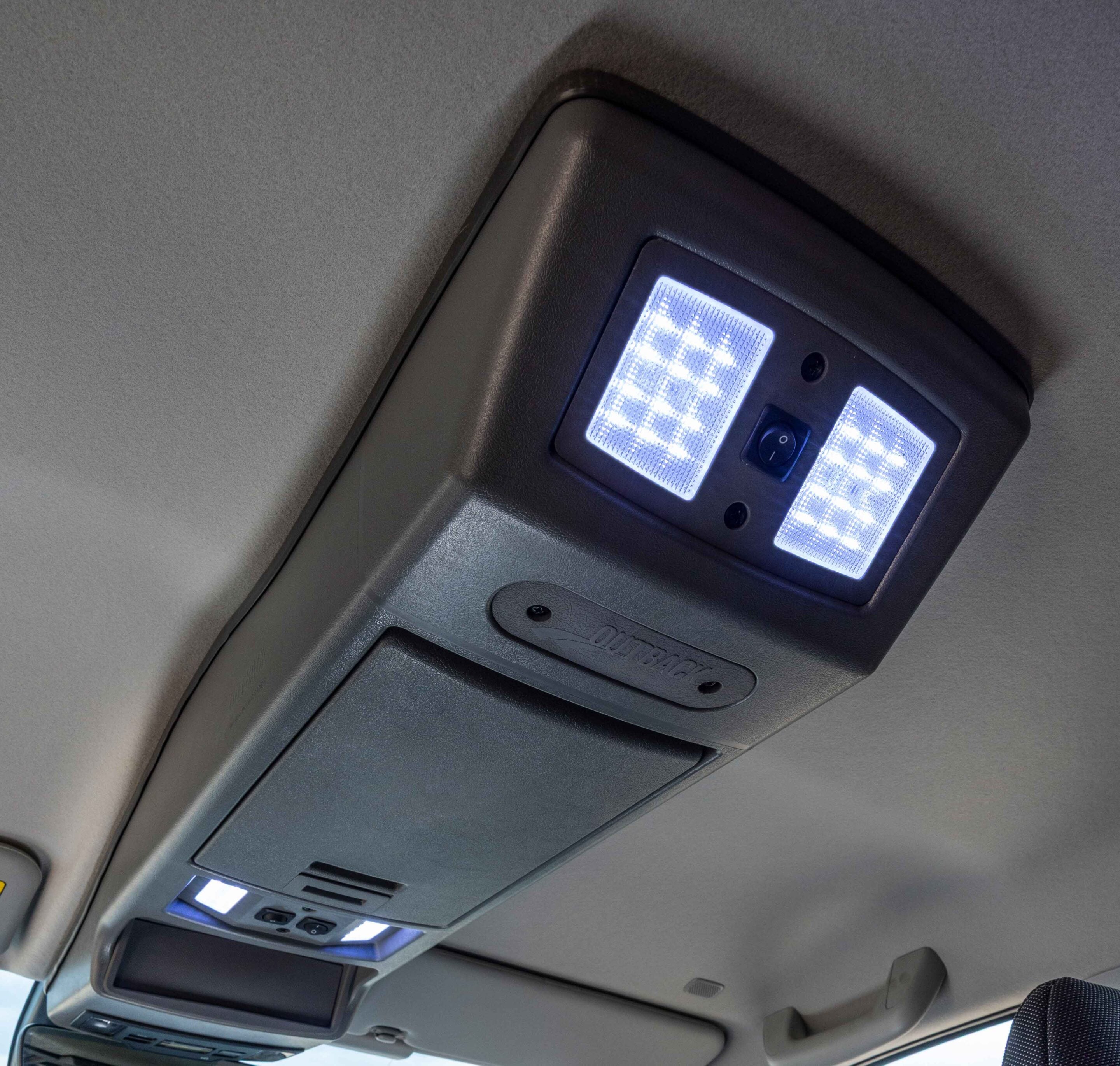
The 4WD Interiors roof console (↗) runs lengthways along the roof, giving you more storage than just the OEM sunglasses holder. The console has a large fold-down storage compartment with a secure catch and a soft interior lining so items stored inside don’t rattle around.
There’s also a flat, rearward-facing panel that is an ideal location for an auxiliary switch panel or your UHF radio unit. Optional fascias are available from 4WD Interiors to suit some radios, along with a radio handpiece mount and a six-switch fascia panel that accepts commonly available accessory switches.
The fascia is well positioned for the driver to see the radio and switches and reach them without taking their eyes off the road for any longer than necessary.
A neat fit with practical features
Other useful inclusions are twin LED map lights for the front-seat occupants, plus LED reading lights for those in the back.
The roof console is well made from a solid, textured material that will suit the cabin of most new vehicles and is a neat match for our HiLux. The console doesn’t obstruct the driver’s view and, being in the centre of the cabin, doesn’t affect headroom either.
A grille in the body aligns with the OEM microphone for the Bluetooth phone connection, so your voice isn’t blocked and you can be heard.
The 4WD Interiors roof console (↗) for the HiLux is a high-quality product that’s covered by a three-year warranty. Anyone handy with tools should be able to fit it themselves, or it can be fitted at any competent 4×4 accessory store.
When we visited 4WD Interiors’ Melbourne headquarters, the team was setting up the new showroom and workshop, with plans to offer installation of its own products and a range of other 4×4 accessories from early 2027. Fitting is also available at the Cairns store.
FAQs
How much does the 4WD Interiors roof console cost?
The roof console has a recommended retail price of $495, plus postage.
Where is 4WD Interiors located?
4WD Interiors is located at 42 Jayco Drive, Dandenong South, Victoria, with fitting also available at its Cairns store.
What storage does the 4WD Interiors roof console provide?
It features a large fold-down storage compartment with a secure catch and soft lining to prevent stored items rattling.
What accessory mounting options are available?
The rear-facing panel can accommodate a UHF radio or auxiliary switch panel, with optional radio fascias, a handpiece mount and six-switch fascia available.
What lighting is built into the roof console?
It includes twin LED map lights for front-seat occupants and separate LED reading lights for rear passengers.
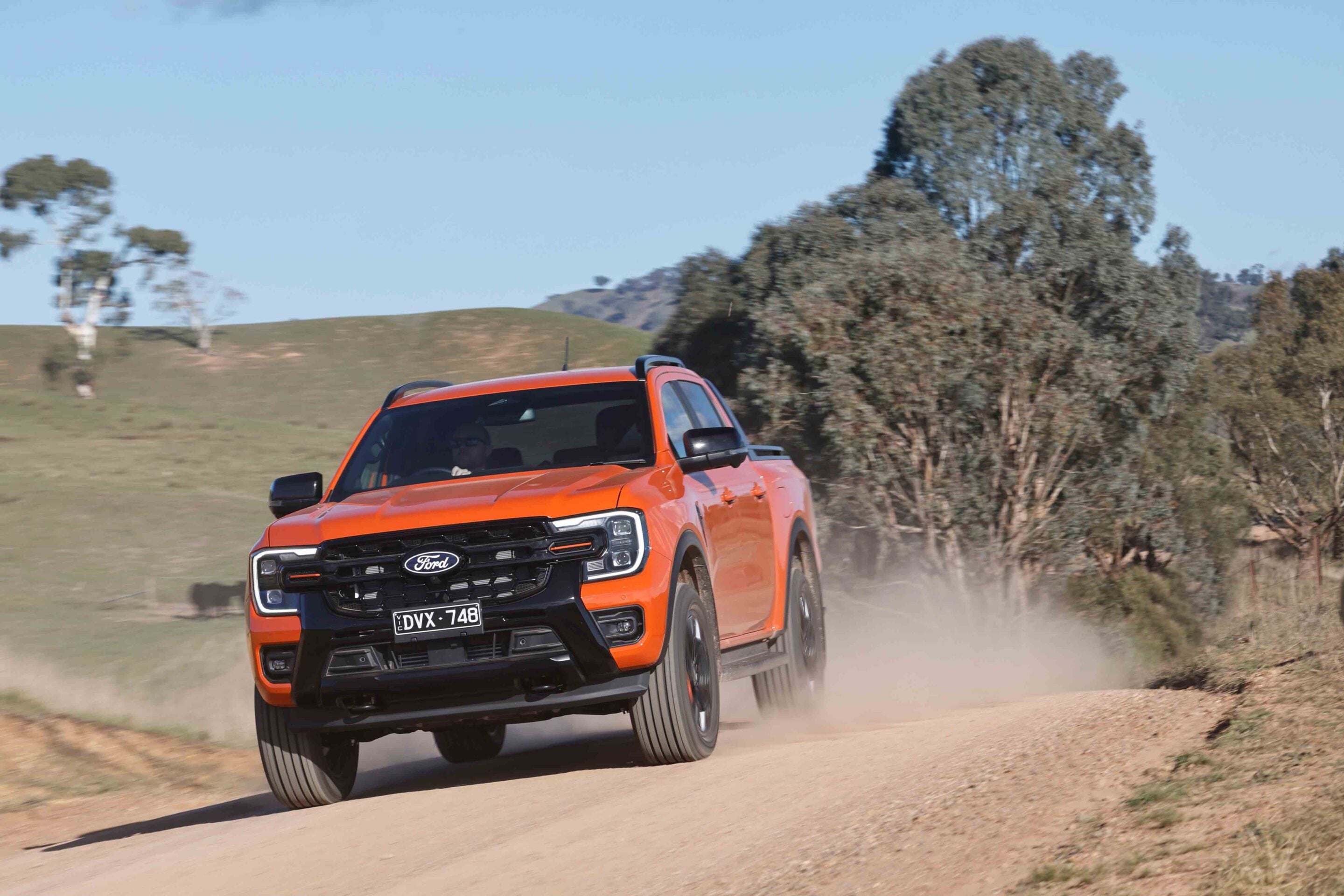
Ford is putting a sweetener on the table for Ranger buyers this Black Friday, bundling a $5000 fuel card with three years of scheduled servicing.
The deal won’t be around for long (↗), with the limited-time promotion running until 30 November 2026. It applies to 2026.5MY Ranger XLT, Wildtrak and Tremor models fitted with either the 2.0-litre four-cylinder or 3.0-litre V6 engine.
“Ranger has become Australia’s best-selling vehicle by giving customers the capability, versatility and confidence they need for work, weekends and everything in between,” said Ambrose Henderson, Director of Marketing, Ford of Australia.
“For Black Friday, we’re adding even more value to selected MY26.5 Ranger models, with a $5,000 fuel card and three scheduled general services included, helping customers make more of every journey from day one.”
The three included general services are scheduled at 12 months/15,000km, 24 months/30,000km and 36 months/45,000km. The offer covers the general service items listed in Ford’s Service Portfolio, excluding additional repairs, consumables and maintenance work outside those inclusions.
The promotion is available to private, Blue, Silver and Gold Business Fleet customers at participating Ford dealers and cannot be combined with other offers. All three services must be carried out by an authorised Ford dealer.
The $5000 fuel card is a digital prepaid Mastercard restricted to fuel-related purchases at participating retailers. Buyers can instead opt for an equivalent $5000 discount off the vehicle’s purchase price. Fuel card claims must be submitted within 90 days of vehicle purchase, with Ford allowing up to two weeks to verify claims.
Separately, Ford is offering a $4000 fuel card or equivalent purchase-price discount on select Ranger, Everest and F-150 models until December 31, 2026. The offer covers specified 2026.5MY and 2027MY Ranger and Everest variants, plus 2024MY F-150 XLT, Lariat and Platinum models.
Full details of the Black Friday deal are available through Ford Australia’s offers page (↗) or local Ford dealers.
FAQs
How much is the Ford Ranger Black Friday fuel card worth?
Eligible buyers receive a $5000 digital prepaid fuel card.
Which Ranger models are included?
2026.5MY Ranger XLT, Wildtrak and Tremor models with either the 2.0-litre or 3.0-litre engine.
How long does the offer run?
Until November 30, 2026.
Does the deal include free servicing?
Yes. The first three scheduled general services are included, covering up to 36 months or 45,000km, whichever comes first.
Can buyers take a discount instead of the fuel card?
Yes. Buyers can choose an equivalent $5000 discount off the vehicle’s purchase price instead of the digital fuel card.
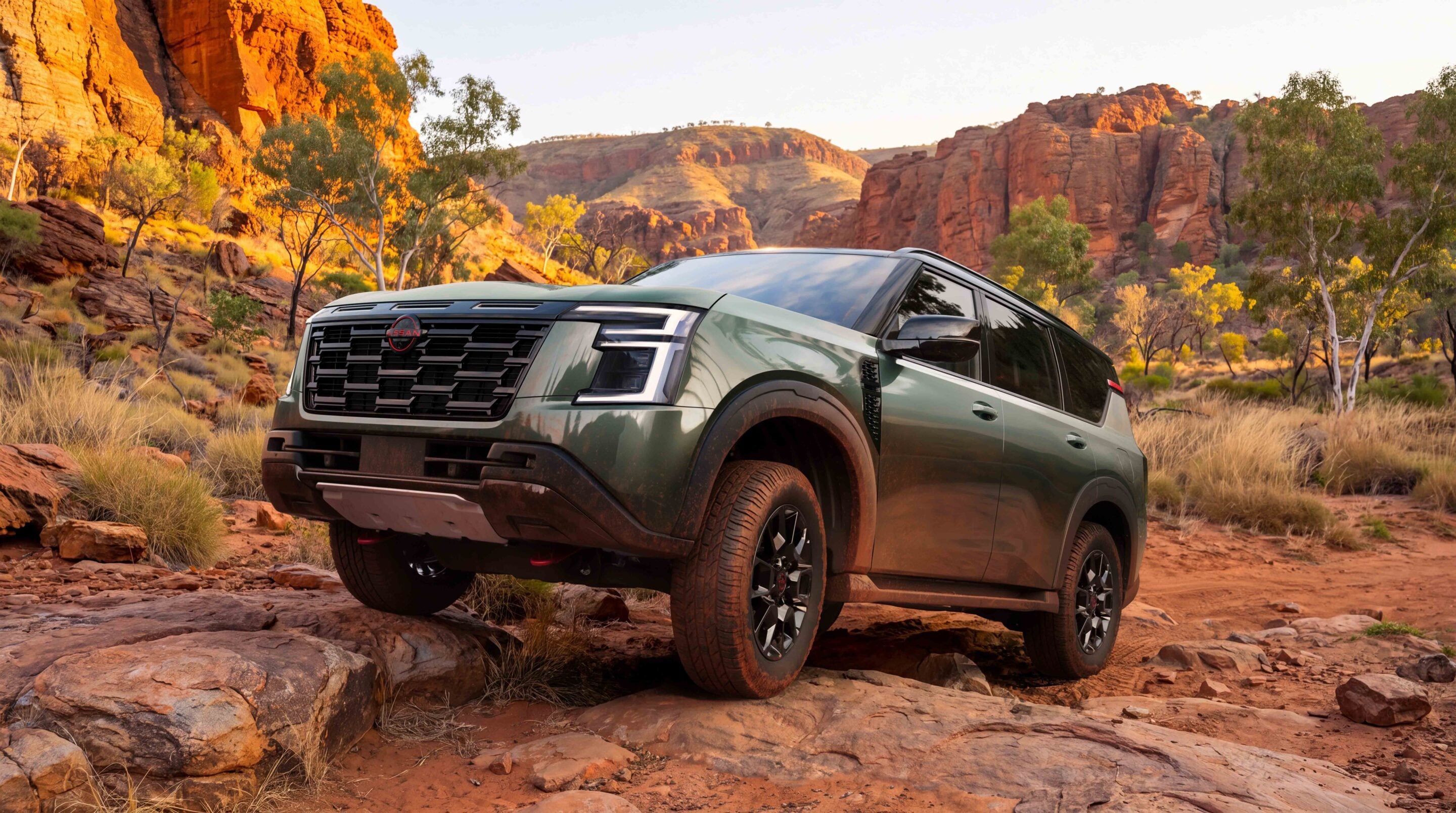
Nissan Australia has released further specifications for its new-generation Patrol ahead of first customer deliveries in December 2026, confirming payload, weight and off-road figures across the range.
Nissan has confirmed the new Patrol can tow 200kg more than its predecessor and key full-size rivals, while a lower kerb mass and increased Gross Vehicle Mass (GVM) deliver more usable carrying capacity. It also claims at least 15 per cent lower combined-cycle fuel consumption than the outgoing V8-powered Y62, despite the new model offering more power and torque.
All six grades, comprising the Ti, Ti+, Ti-L, Ti-L+, PRO-4X and Ti-L Reserve, share a 3700kg braked towing capacity and 370kg maximum towball download. The Patrol has a 3550kg Gross Vehicle Mass (GVM), up 50kg over its predecessor, and a Gross Combined Mass (GCM) of 6800kg.
Kerb weight varies between grades, which means payload ranges from 734kg in the flagship Ti-L Reserve to 848kg in the entry-level Ti. Those payload figures become particularly important when towing. With a 3500kg caravan and a typical 10 per cent towball download, the Ti-L Reserve has 384kg remaining for occupants and luggage. That’s around 80kg more than the outgoing Patrol Ti-L, and more than comparable flagship versions of the LandCruiser 300 Series and DENZA B8. The entry-level Ti has considerably more capacity left under the same conditions, at up to 498kg.
At the maximum 3700kg towing limit, the Patrol’s full 6800kg GCM is used, leaving between 284kg in the Ti-L Reserve and 398kg in the Ti for occupants and luggage.
“Australians don’t just tow – they tow a long way, fully loaded, with the family on board. With the all-new Patrol, we focused on giving owners more of the capacity they can actually use, not just a bigger number on a spec sheet,” said Steve Milette, Managing Director, Nissan Oceania.
“More usable payload, a higher towing capacity and 700Nm on tap make the all-new Patrol the most capable towing Patrol we have ever offered Australian customers.”
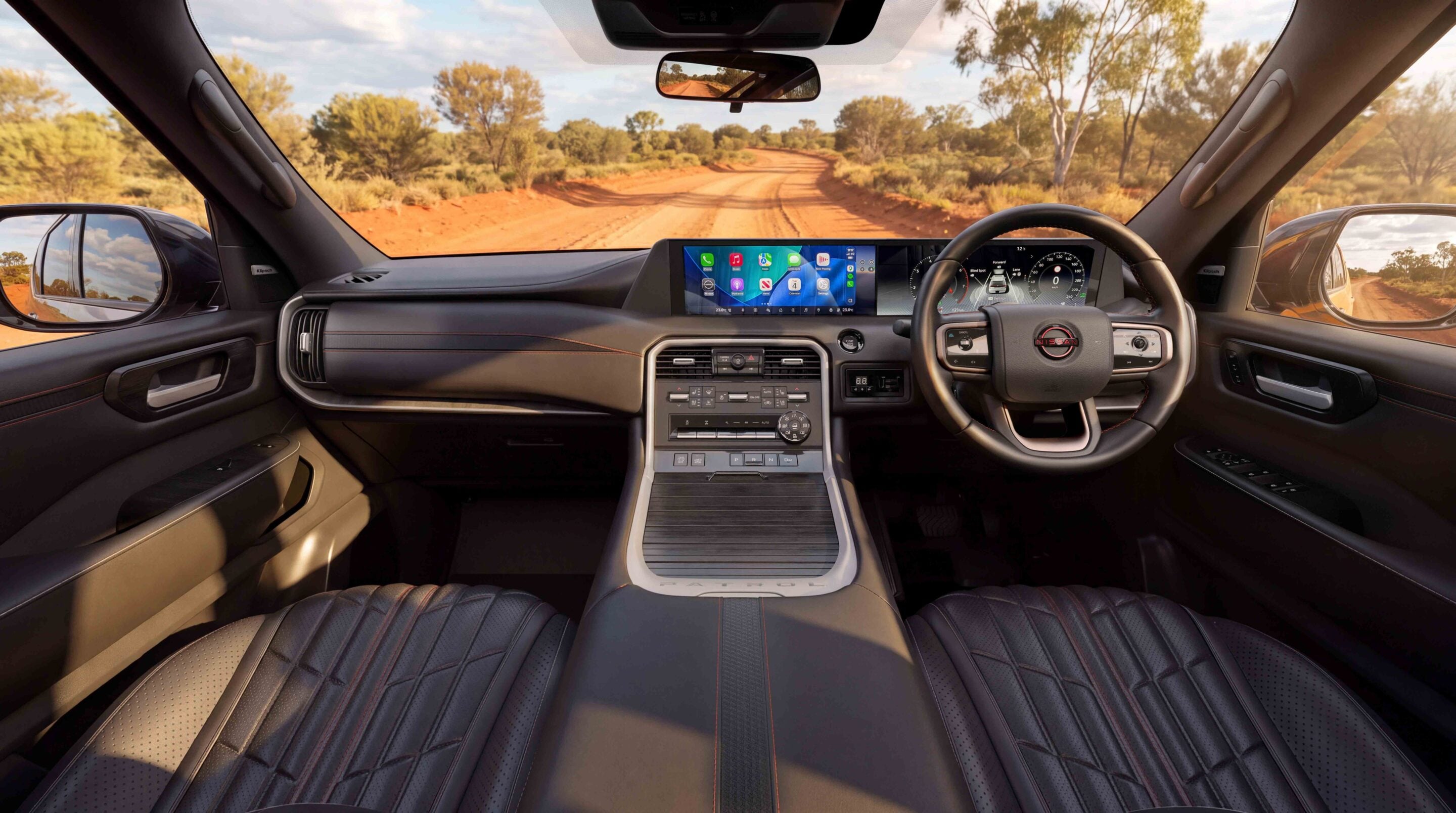
Power comes from a 3.5-litre twin-turbo petrol V6 producing 317kW and 700Nm, paired with a nine-speed automatic transmission. All six grades feature full-time four-wheel drive, a dual-range transfer case with high and low range, and an electronic locking rear differential. Eight drive and terrain modes are also standard: Standard, Eco, Sport, Tow, Snow, Sand, Rock and Mud/Rut. A full-size matching spare wheel and tyre rounds out the standard equipment.
PRO-4X gets the off-road hardware
The PRO-4X is the most off-road-focused grade in the range, gaining adaptive air suspension alongside Nissan’s Intelligent Dynamic Damping system.
In Off-Road Mode, the suspension raises ride height to deliver 271mm of ground clearance, a 29-degree approach angle, 25.5-degree departure angle and 27.5-degree ramp breakover angle.
It also gets 20-inch black alloy wheels with 275/60 R20 all-terrain tyres and black wheel-arch flares. The Ti-L Reserve shares the adaptive air suspension, with 272mm of ground clearance in Off-Road Mode, a 27-degree approach angle and 27-degree ramp breakover angle. Both grades also come standard with an electronic trailer brake controller.
Warranty and availability
Orders for the new Patrol are open now through Nissan dealers nationally, with first customer deliveries scheduled to commence in December 2026.
All variants are covered by Nissan’s 10-year/300,000km Nissan MORE warranty, including up to 10 years/300,000km of roadside assistance when serviced through authorised Nissan dealers. Servicing is priced at a flat $499 for the first five years, with service intervals set at 12 months or 15,000km, whichever comes first.
FAQs
How much can the new Nissan Patrol tow?
The new Patrol has a maximum braked towing capacity of 3700kg, up 200kg over the outgoing Y62.
What is the new Nissan Patrol’s payload?
Payload ranges from 734kg in the Ti-L Reserve to 848kg in the entry-level Ti.
What are the new Patrol’s GVM and GCM?
All grades have a 3550kg GVM and 6800kg GCM.
Which new Patrol has the best off-road angles?
The PRO-4X offers 29 degrees of approach, 25.5 degrees of departure and 27.5 degrees of rampover in Off-Road Mode.
When do first customer deliveries begin?
First customer deliveries are scheduled to commence in December 2026.
2027 Nissan Patrol weights and dimensions
| Specification | Ti / Ti+ | Ti-L / Ti-L+ | PRO-4X | Ti-L Reserve |
|---|---|---|---|---|
| Length (mm) | 5325 | 5325 | 5325 | 5325 |
| Width (mm) | 2040 | 2040 | 2065 | 2040 |
| Height (mm) | 1945 | 1950 | 1945 | 1945 |
| Wheelbase (mm) | 3075 | 3075 | 3075 | 3075 |
| Track front/rear (mm) | 1730/1725 | 1730/1725 | 1730/1730 | 1730/1730 |
| Ground clearance (mm) | 226 | 231 | 219/271 | 220/272 |
| Approach (degrees) | 25 | 25 | 26.5/29 | 24.5/27 |
| Departure (degrees) | 23 | 23.5 | 23/25.5 | 23/25.5 |
| Ramp breakover (degrees) | 24 | 25 | 23/27.5 | 23/27 |
| Kerb mass (kg) | Ti: 2702 / Ti+: 2731 | Ti-L: 2770 / Ti-L+: 2776 | 2792 | 2816 |
| GVM (kg) | 3550 | 3550 | 3550 | 3550 |
| Payload (kg) | Ti: 848 / Ti+: 819 | Ti-L: 780 / Ti-L+: 774 | 758 | 734 |
| GCM (kg) | 6800 | 6800 | 6800 | 6800 |
| Braked towing (kg) | 3700 | 3700 | 3700 | 3700 |
| Unbraked towing (kg) | 750 | 750 | 750 | 750 |
| Maximum towball download (kg) | 370 | 370 | 370 | 370 |
| Fuel tank (L) | 89 | 89 | 89 | 89 |
| Wheels and tyres | 18-inch, 265/70 R18 | 20-inch, 275/60 R20 | 20-inch, 275/60 R20 AT | 22-inch, 275/50 R22 |
| Suspension | Coil, multi-link independent | Coil, with Intelligent Dynamic Damping (e-Damper) | e-Damper and adaptive air suspension | e-Damper and adaptive air suspension |
| Electronic trailer brake controller | Not standard | Not standard | Standard | Standard |
Ground clearance and off-road figures for PRO-4X and Ti-L Reserve show normal ride height / Off-Road Mode high setting where available.
2027 Nissan Patrol pricing
| Grade | Price (MSRP) |
|---|---|
| Ti | $98,990 |
| Ti+ | $109,480 |
| Ti-L | $122,690 |
| Ti-L+ | $134,690 |
| PRO-4X | $137,590 |
| Ti-L Reserve | $145,990 |
Prices exclude on-road costs.
iThrottle (↗) is an Australian business specialising in electronic throttle controllers and innovative automotive tech for 4WD owners.
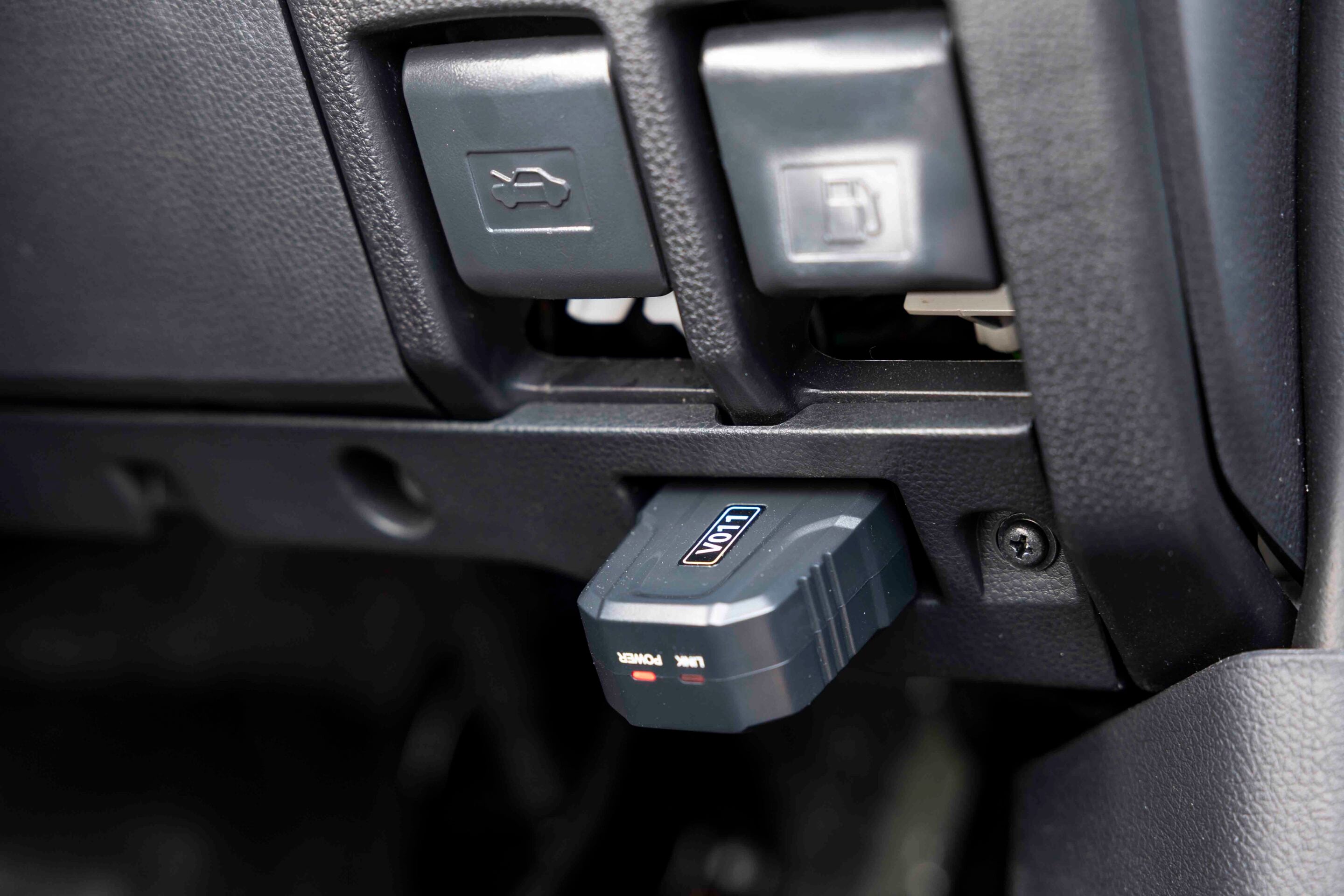
Built around the idea of developing a better throttle controller with more practical features and greater value for Australian drivers, the business has since expanded its range to include Bluetooth connectivity, vehicle security and specialised driving modes, alongside accessories such as GPS displays, battery monitors, OBD2 scan tools, wireless CarPlay units and tyre deflation valves.
“Our focus has evolved beyond throttle response alone. We’ve invested in developing smarter technology, incorporating Bluetooth connectivity, vehicle security and specialised driving modes into a single compact device,” said Sam Ross, Director of iThrottle.
The business sells directly through its online store and through automotive retailers across Australia, with customer feedback helping shape its products and ongoing development.
More than throttle response
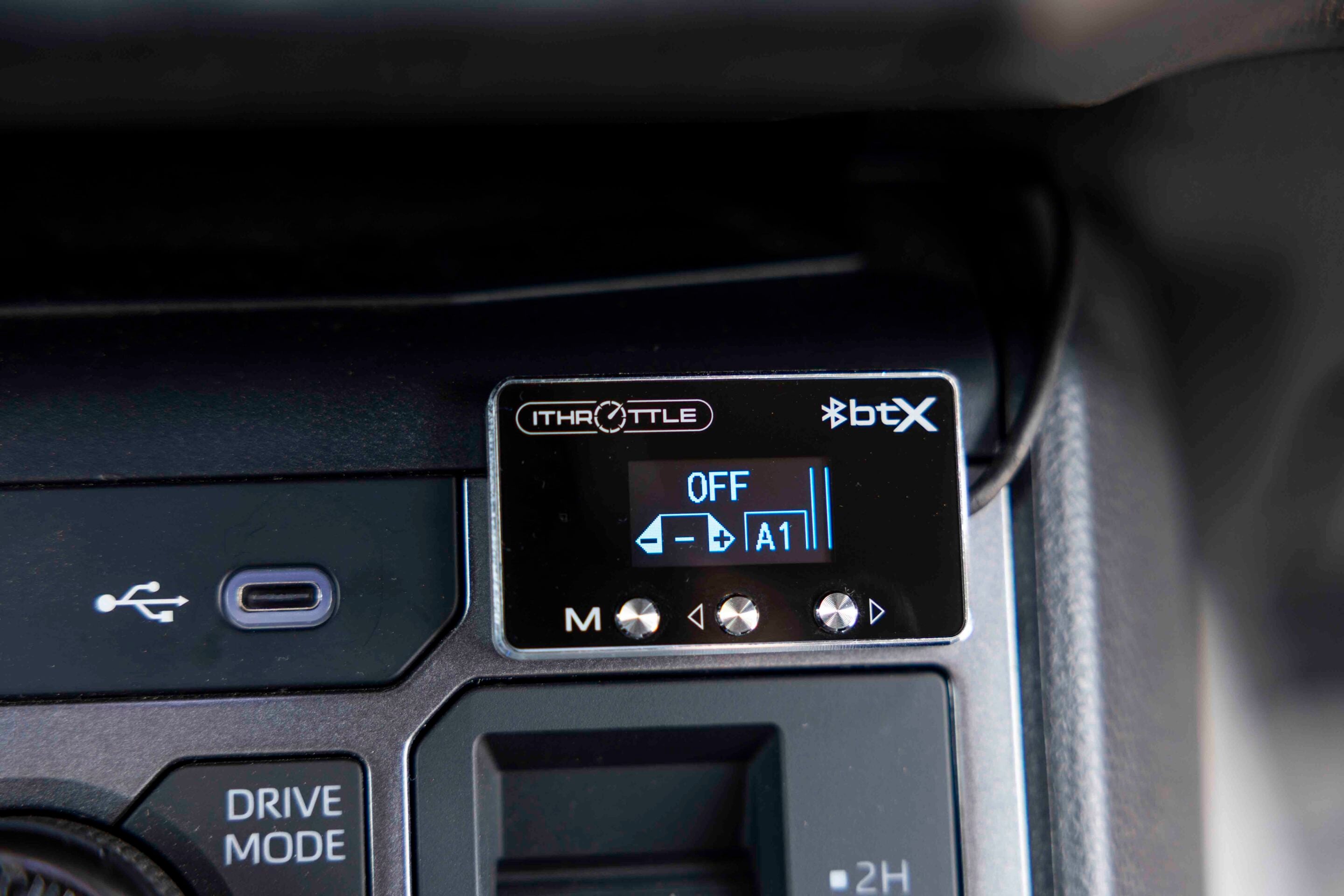
The iThrottle Bluetooth Throttle Controller (↗) is the business’s flagship product, allowing drivers to customise accelerator response to suit different conditions, from towing and off-road driving to everyday use.
Its Automatic SmartLock feature is a key point of difference, adding a pedal immobiliser that automatically locks and unlocks through Bluetooth proximity. The feature has attracted significant customer interest, with iThrottle (↗) claiming to be the only throttle controller in Australia to offer automatic pedal locking and unlocking.
“These features reflect our philosophy of creating products that solve real problems rather than simply following industry trends,” said Ross.
Customers and challenges
iThrottle’s customers range from everyday 4WD owners and touring enthusiasts to those regularly towing caravans, boats and trailers. Ross says buyers are increasingly looking for accessories that do more than one job.
“We’ve noticed a growing demand for products that offer multiple benefits. Customers increasingly want technology that improves their driving experience while also providing convenience, security and easy smartphone integration,” he said.
Meeting those expectations isn’t easy in a market increasingly crowded with inexpensive imported products. Rather than competing purely on price, iThrottle (↗) focuses on product features, quality and customer support.
“One of the biggest challenges is standing out in a market increasingly flooded with inexpensive imported products. For us, the answer is innovation, quality and genuine customer support,” added Ross.
He also sees growing interest in vehicle security, smartphone connectivity and technology that makes off-road driving easier and safer as an opportunity for the business.
What’s next for iThrottle?
The business is continuing to expand its range of 4WD accessories and vehicle security products, with further development planned around Bluetooth connectivity, vehicle diagnostics and security.
“Our focus remains on integrating intelligent technology into practical, easy-to-use products that improve the ownership experience,” said Ross. “Our goal is simple: To keep pushing the boundaries of what customers should expect from 4WD accessories while building iThrottle (↗) into a recognised and trusted Australian automotive technology brand.”
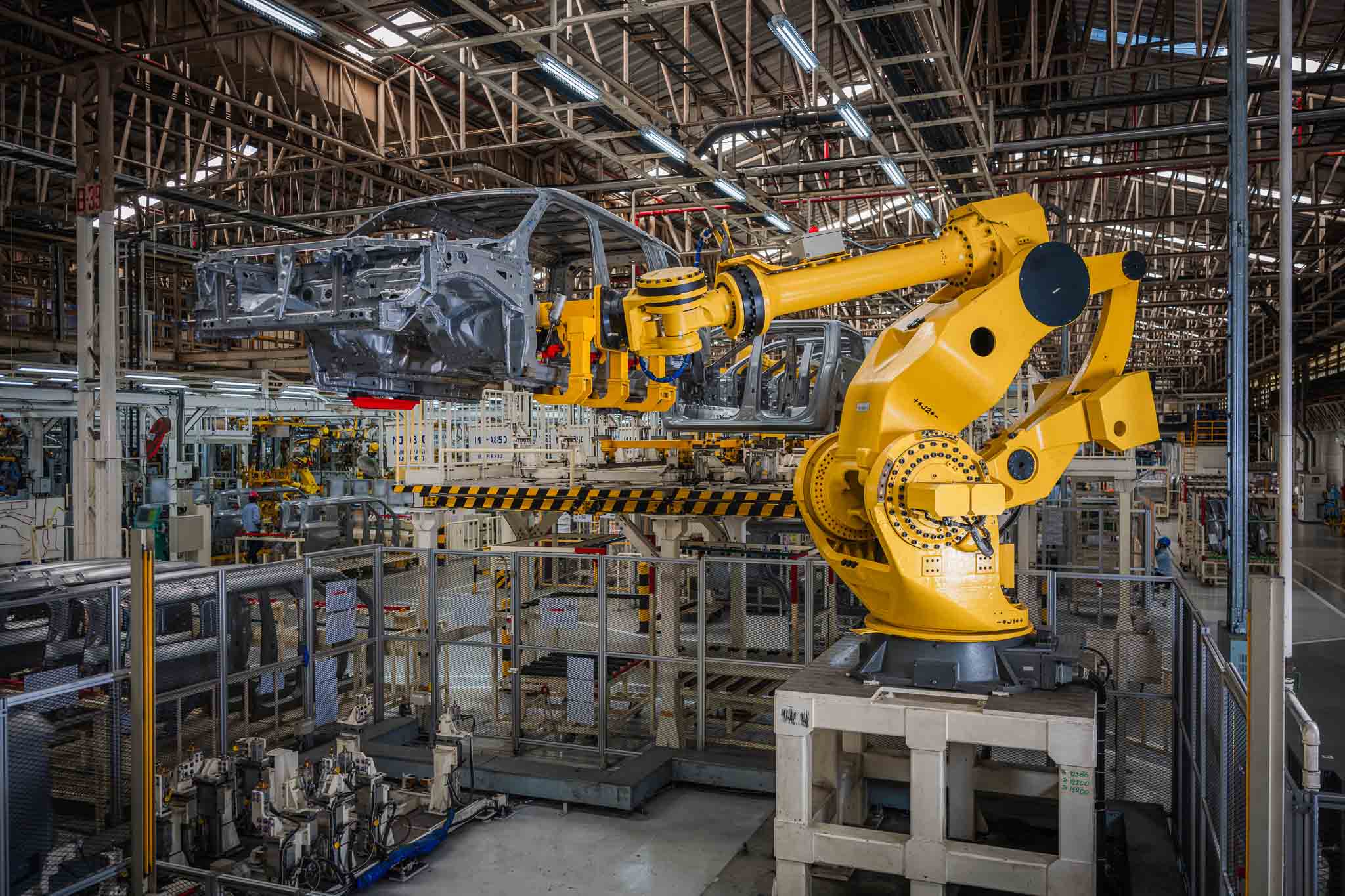
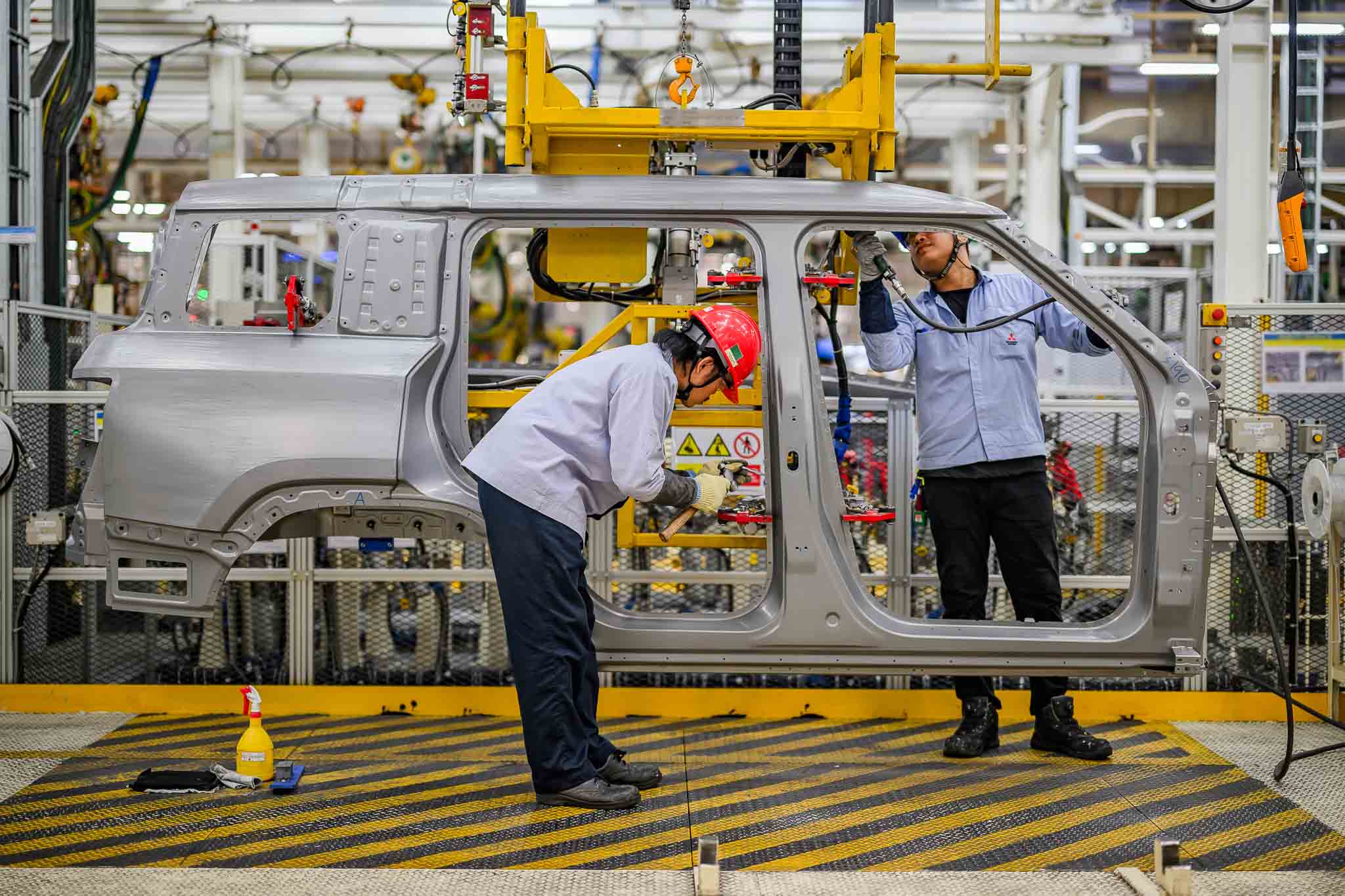
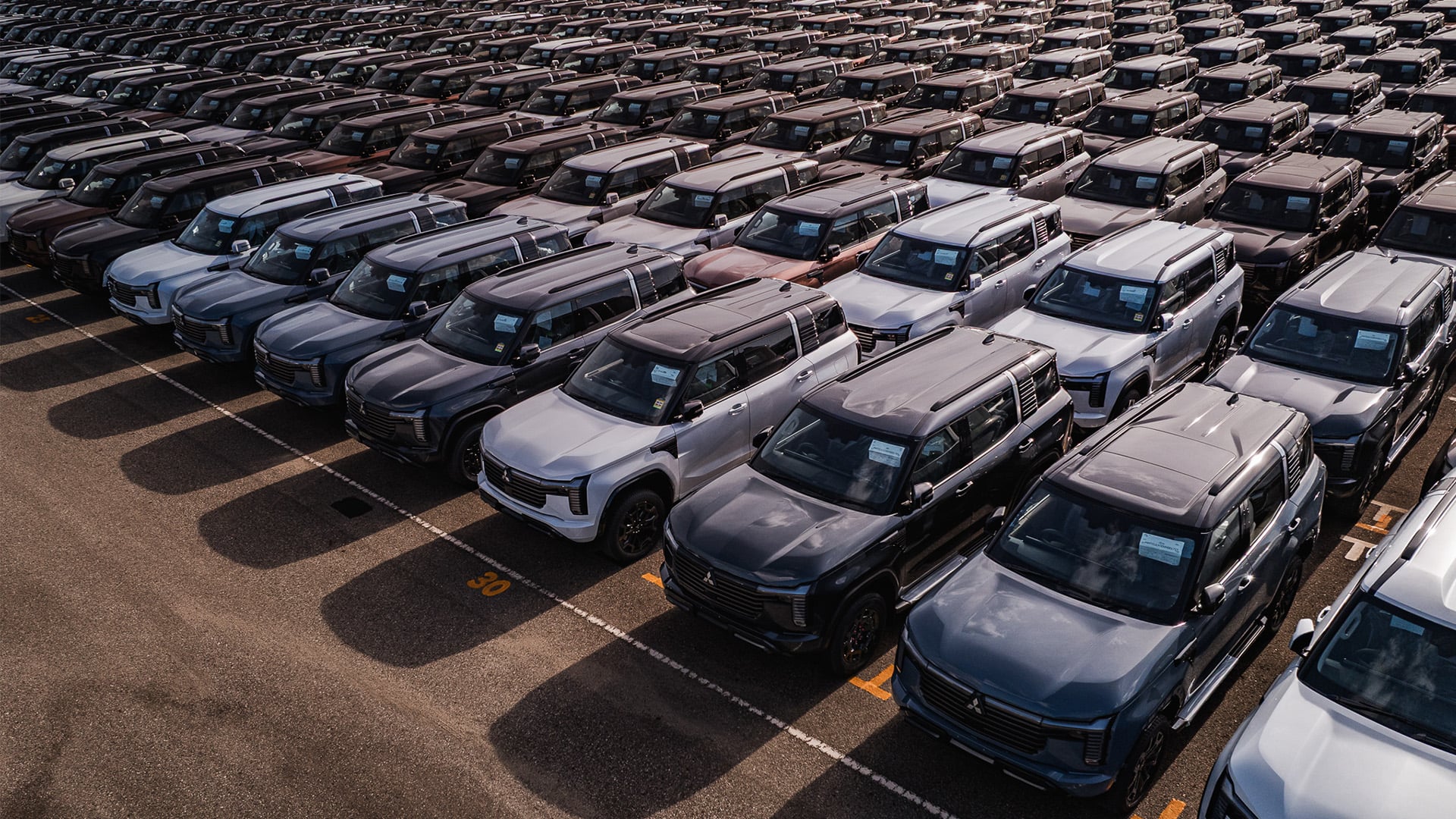
The first allotment of the all-new Mitsubishi Pajero is en route to Australia, with production of Australian-market models now underway in Thailand ahead of the new-gen off-roader’s December 2026 arrival.
The first vehicles have departed Mitsubishi Motors’ Laem Chabang production facility. Australia is among the first three markets scheduled to receive the new Pajero, alongside Japan and Thailand.
“Since September’s global premiere, excitement around the All-New Mitsubishi Pajero has remained incredibly high,” said MMAL CEO, Shunichi Kihara. “Customer interest is unprecedented, with over 10,000 expressions of interest received to date, and a growing Australian order bank.
“Initial dealer and media feedback has been extremely positive, and we are looking forward to seeing the first customers on Australian roads in their new Pajero before Christmas,” he said.
The new Pajero will be available in Australia with five- and seven-seat configurations. All variants are powered by a 2.4-litre four-cylinder turbo-diesel engine producing 150kW and 480Nm, paired with an eight-speed automatic transmission.
Four-wheel drive is handled by Mitsubishi’s Super Select 4WD-II system, which includes a dual-range transfer case and rear differential lock across the range. Seven drive modes are available: Normal, Eco, Gravel, Snow, Mud, Sand and Rock. Ground clearance is 230mm, with approach, breakover and departure angles of 30.4, 22.6 and 25.8 degrees respectively. Braked towing capacity is rated at 3500kg.
The Pajero will also launch with a range of Australian-developed accessories, including locally made steel front protection bars in hooped and hoopless designs, a snorkel, roof rack, side protection bars and towing equipment. Mitsubishi’s local engineering team has been working on the accessories for almost five years, with the protection bars designed to retain the vehicle’s full advanced driver assistance systems.
Inside, the range gets a 12.3-inch digital instrument display and infotainment touchscreen, while higher-specification models receive a larger 14.3-inch centre display. Wireless Apple CarPlay and Android Auto are standard across the range.
Mitsubishi’s 10/10/10 Diamond Advantage program includes a 10-year/200,000km warranty, 10-year capped-price servicing and 10-year roadside assistance, subject to program conditions.
Australian pricing starts at $68,490 for the five-seat GLS, rising to $84,990 for the seven-seat GSR.
2027 Mitsubishi Pajero pricing
- Pajero GLS five-seat: $68,490
- Pajero GLS seven-seat: $69,990
- Pajero EXCEED seven-seat: $79,990
- Pajero GSR seven-seat: $84,990
What do you get?
Pajero GLS
- 2.4-litre 4N16 turbo-diesel | 150kW/480Nm
- Eight-speed automatic
- Super Select 4WD-II
- Rear differential lock
- Seven drive modes
- 3500kg braked towing capacity
- 18-inch alloy wheels with 255/65R18 Mud and Snow tyres
- Five- or seven-seat configuration
- Waterproof black fabric seats
- 12.3-inch digital instrument cluster
- 12.3-inch multimedia display
- Wireless Apple CarPlay and Android Auto
- Wireless phone charger
- Mitsubishi CONNECT
- Dual-zone front and automatic rear air conditioning
- Electric tailgate
- Comfort and convenience
- Heated steering wheel
- Keyless entry and push-button start
- Electric park brake with auto-hold
- Rain-sensing wipers
- Auto-dimming rear-view mirror
- Privacy glass
- LED headlights, fog lamps and DRLs
- Black roof rails
- Grey side steps
- Black wheel-arch mouldings
Pajero EXCEED
In addition to GLS
- 20-inch machined alloy wheels
- Black leather seats
- Electric front seats
- Heated front and rear seats
- 14.3-inch multimedia display
- 14.3-inch digital instrument cluster
- Refrigerated centre console
- Second-row sunshades
- Yamaha Ultimate 12-speaker audio system with amplifier and subwoofer
Pajero GSR
In addition to EXCEED
- 20-inch black alloy wheels
- Two-tone camel and black leather seats
- Ventilated front seats
- Front-seat, steering-wheel and door-mirror memory
- Panoramic sunroof
- Black headlining
- Black exterior mirrors and wheel-arch mouldings
- Dark bumpers
- Front grille LED lighting
- Digital rear-view mirror
- Adaptive Driving Beam
- Nanoe X air purifier
The plug-in hybrid ute market is getting more interesting, with the JAC Hunter and Chery Stockman taking two different approaches to electrified four-wheel driving.
The Hunter pairs a 2.0-litre turbo-petrol engine with two electric motors and a four-speed dedicated hybrid transmission (4DHT). The Stockman uses a 2.5-litre turbo-diesel plug-in hybrid system, also with a dedicated hybrid transmission. For this spec comparison, we’re putting the JAC Hunter X up against the flagship Chery Stockman Ultimate. The Hunter X is priced at $54,844, while the Stockman Ultimate costs $57,990. Both prices are before on-road costs. Chery also offers a cheaper Urban grade at $52,990, while JAC’s range includes the $49,988 Hunter Pro.
Both utes claim around 100km of electric range, but their towing figures aren’t quite equal. The JAC is rated to tow 3500kg, while the Chery Stockman falls just short at 3495kg. There are also key differences in payload, GCM and off-road hardware. Differential locks, low-range gearing and standard equipment also help separate the two. Here’s how the two flagship variants compare.
Quick verdict
- Power: JAC, with 360kW and 1010Nm of claimed combined output against the Stockman’s 350kW and 800Nm.
- Electric range: Both claim around 100km, although the figures use different test cycles and aren’t directly comparable.
- Towing and payload: The Hunter X is rated to tow 3500kg, just ahead of the Stockman Ultimate’s 3495kg. Its 915kg payload also beats the Chery’s 800kg H/T or 765kg A/T, giving the JAC a 115kg or 150kg advantage respectively. It also has the higher calculated remaining allowance when towing at maximum capacity.
- Off-road ability: Stockman Ultimate is equipped with low range, three differential locks and greater ground clearance on its optional all-terrain tyre package. The Hunter X gets standard front and rear lockers.
- Value: Hunter X priced about $3000 below the Stockman Ultimate, before on-road costs.
Specifications
| Specification | JAC Hunter X | Chery Stockman Ultimate |
|---|---|---|
| Price | $54,844 | $57,990 |
| Powertrain | 2.0L turbo-petrol PHEV | 2.5L turbo-diesel PHEV |
| Fuel type | E10-compatible petrol | Diesel |
| Engine power | 160kW | 140kW |
| Engine torque | 370Nm | 450Nm |
| Combined power | 360kW | 350kW |
| Combined torque | 1010Nm | 800Nm |
| Transmission | 4-speed dedicated hybrid transmission (4DHT) | 4-speed dedicated hybrid transmission (4DHT) |
| Drive | 4WD | 4WD |
| Battery | 31.2kWh LFP | 34kWh LFP |
| Electric range | 100km NEDC | 100km WLTC (H/T); 96km WLTC (A/T) |
| Combined range | 1005km NEDC | Not supplied |
| Combined fuel consumption | 1.6L/100km NEDC | 1.0L/100km WLTC (H/T); 1.1L/100km WLTC (A/T) |
| Fuel tank | 77L | 80L |
| AC charging | 11kW | 6.6kW |
| DC charging | 46kW | 70kW |
| Braked towing | 3500kg | 3495kg |
| Kerb weight | 2555kg | 2700kg H/T; 2735kg A/T |
| Payload | 915kg | 800kg H/T; 765kg A/T |
| GVM | 3470kg | 3500kg |
| GCM | 6430kg | 6500kg |
| Ground clearance | 200mm | 235mm H/T; 247mm A/T |
| Wading depth | 550mm | Not supplied |
| Approach angle | 28 | 30 |
| Departure angle | 23 | 25 |
| Rampover angle | 23 | Not supplied |
| Low range | No | Yes |
| Front differential lock | Yes | Yes |
| Centre differential lock | No | Yes |
| Rear differential lock | Yes | Yes |
| External / internal power | 6.6kW V2L; 220V internal power outlet | Two 230V power outlets |
Chery’s Ultimate comes standard with highway-terrain tyres. Its optional all-terrain package brings 17-inch wheels, 285/70 R17 tyres, 247mm ground clearance and a higher kerb weight. The JAC Hunter X also offers optional dealer-fit all-terrain tyres, with buyers able to choose between Pirelli Scorpion AT or Yokohama Geolandar AT4 rubber. Chery’s indicative specification sheet lists electric range and fuel consumption using the WLTC test cycle. Its Australian pricing announcement also quotes a 100km NEDC electric range.
Price and equipment
The JAC Hunter X costs $54,844, making it $3146 cheaper than the Chery Stockman Ultimate at $57,990. Both prices are before on-road costs. The Hunter Pro starts at $49,988, while the entry-level Stockman Urban is priced at $52,990.
The Stockman Ultimate adds a head-up display, heated and ventilated front seats, heated steering wheel, digital rear-view mirror and 14-speaker audio system over the entry-level Urban. However, several of its other features are also fitted to the Hunter X, including a 360-degree camera with chassis view, roof rails, front fog lamps, heated and power-folding mirrors and rear privacy glass.
Both utes also have large infotainment touchscreens, wireless and wired Apple CarPlay and Android Auto, synthetic leather upholstery and powered front seats. The Hunter X has standard front and rear differential locks, while the Stockman Ultimate gets three locking differentials: front, centre and rear.
The Hunter X’s suspension and handling have also been locally tuned by Multimatic’s Michael Barber, the vehicle dynamics engineer behind the development of several high-performance vehicles, giving the ute a chassis setup tailored to Australian conditions.
Powertrain and performance
The two utes take different routes to electrification.
The Hunter uses a 2.0-litre turbocharged petrol engine producing 160kW and 370Nm, backed by front and rear electric motors. The front motor produces 130kW and 300Nm, while the rear motor delivers 150kW and 340Nm. JAC quotes combined system outputs of 360kW and 1010Nm, making the Hunter X the more powerful of the two on paper.
The Stockman uses a larger 2.5-litre turbo-diesel engine producing 140kW and 450Nm. It is paired with a 34kWh lithium iron phosphate battery and electric drive components, with combined system outputs of 350kW and 800Nm. Both utes use a four-speed dedicated hybrid transmission (4DHT) and send drive to all four wheels.
The JAC has the higher quoted combined power and torque, while the Chery’s diesel engine produces more torque on its own. The combined figures are manufacturer-quoted system outputs, rather than measurements at the wheels.
Electric range and charging
Both utes offer a claimed electric driving range of around 100km, although their published figures need a little explanation.
JAC quotes 100km of electric range for the Hunter X on the NEDC test cycle, from its 31.2kWh battery. Chery’s Australian pricing announcement also quotes up to 100km on the NEDC cycle, but its indicative specification sheet lists 100km on the WLTC cycle with highway-terrain tyres and 96km with the optional all-terrain tyres. Those figures should not be treated as a direct comparison unless the same test cycle is used. The Stockman has a slightly larger 34kWh battery, with both vehicles using LFP chemistry.
JAC quotes a combined NEDC driving range of 1005km and fuel consumption of 1.6L/100km. Chery’s indicative sheet lists combined consumption of 1.0L/100km on WLTC for the Ultimate with highway-terrain tyres, rising to 1.1L/100km with the all-terrain package. A directly comparable combined driving-range figure has not been supplied for the Stockman.
Charging is another area where the Chery has the advantage on paper. The Stockman supports up to 70kW DC charging, while the Hunter X is listed with a maximum DC charging rate of 46kW. The Hunter X also has a 6.6kW vehicle-to-load (V2L) function for powering external appliances, along with a 220V power outlet in the cabin. The Stockman specification sheet lists two 230V power outlets, although it does not provide a corresponding V2L output rating.
Towing, payload and GCM
Both utes are designed to tow heavy loads, with the Hunter X rated to 3500kg braked and the Stockman just behind at 3495kg. The Chery also has a 750kg unbraked towing capacity and a maximum towball download of 350kg.
Payload is where the JAC has a clear advantage. The Hunter X is rated at 915kg, compared with 800kg for the Stockman Ultimate on standard highway-terrain tyres. Fitting the optional all-terrain package increases the Chery’s kerb weight and reduces payload to 765kg.
GCM is just as important as the maximum towing figure when working out how much weight a ute can carry while towing. Using the formula below:
GCM − trailer weight − kerb weight = remaining allowance
- Hunter X: 6430 − 3500 − 2555 = 375kg
- Stockman Ultimate (H/T): 6500 − 3495 − 2700 = 305kg
- Stockman Ultimate (A/T): 6500 − 3495 − 2735 = 270kg
On these figures, the Hunter X has 70kg more theoretical remaining allowance than the Stockman Ultimate with highway-terrain tyres, increasing to a 105kg advantage over the all-terrain version when both are towing at their maximum rated capacity.
This is a calculation based on GCM, trailer mass and kerb weight, not an additional payload allowance. Occupants, luggage and accessories all need to be accounted for, along with towball download. The vehicle must also remain within its GVM and front and rear axle limits.
The JAC has the higher payload and more remaining allowance in this calculation, while the Stockman has a slightly higher GCM. The difference in the Stockman’s kerb weight and its lower maximum towing rating affects the final result.
Off-road capability
The Stockman Ultimate has the more conventional four-wheel-drive setup, with selectable 4H and 4L, Intelligent 4WD and centre, rear and front differential locks. The front locker is the key difference between the Ultimate and the entry-level Urban, which gets centre and rear lockers.
The Hunter X has front and rear differential locks as standard, but it doesn’t have a conventional low-range transfer case. That’s an important distinction for buyers who regularly tackle steep, slow-speed tracks or technical terrain.
Ground clearance also favours the Chery. The Stockman Ultimate is listed at 235mm with its standard highway-terrain tyres, increasing to 247mm with the optional all-terrain package. The Hunter X has 200mm of ground clearance. The Stockman also has better quoted approach and departure angles, at 30 and 25 degrees respectively, compared with 28 and 23 degrees for the JAC. The Hunter X has a 23-degree rampover angle, but Chery has not supplied a corresponding figure for the Stockman.
The Stockman has the advantage in low-range gearing, ground clearance and published approach and departure angles. The Hunter X counters with its standard front and rear lockers, but the absence of conventional low range will matter to buyers who regularly venture onto more challenging tracks.
Warranty and ownership
Both utes come with a seven-year vehicle warranty, but JAC has a clear advantage for buyers planning to use their ute for work.
The Hunter X is covered by a seven-year, unlimited-kilometre warranty that includes commercial use, meaning there is no separate 150,000km cap for business buyers. JAC also includes seven years of capped-price servicing and roadside assistance, along with an eight-year/150,000km battery warranty.
Another useful inclusion is JAC’s Ute-for-Ute loan program. If a Hunter needs warranty repairs that take it off the road, JAC provides a replacement ute at no cost to the owner. For metro customers, a loan vehicle can be arranged the same day if ordered before 2pm, while regional customers can expect one the next business day, subject to ordering before 2pm.
Chery also offers a seven-year, unlimited-kilometre warranty for private use, but its terms limit coverage to seven years or 150,000km, whichever comes first, for vehicles used primarily as taxis, rideshare vehicles, hire or rental vehicles, driving-school vehicles, or for delivery and courier work. Its high-voltage battery is covered for eight years with unlimited kilometres. Chery also offers seven years of capped-price servicing and up to seven years of roadside assistance, renewable annually through scheduled servicing at an authorised dealer.
| Ownership coverage | JAC Hunter X | Chery Stockman Ultimate |
|---|---|---|
| Vehicle warranty | 7 years/unlimited km, including commercial use | 7 years/unlimited km for private use; 7 years/150,000km for specified commercial uses |
| High-voltage battery warranty | 8 years/150,000km | 8 years/unlimited km |
| Roadside assistance | 7 years | Up to 7 years, renewable annually through scheduled servicing |
| Capped-price servicing | 7 years | 7 years |
| Commercial use | Covered under the 7-year/unlimited-kilometre vehicle warranty | 150,000km limit applies to specified commercial uses |
| Replacement vehicle | Ute-for-Ute loan program | Not specified |
Which one should you buy?
The JAC Hunter X is the cheaper of the two, has higher quoted combined power and torque, and carries a useful payload advantage. Its 915kg payload and calculated remaining allowance while towing at maximum capacity will appeal to buyers who need to carry gear as well as haul a trailer.
The Hunter is also now in stock, with the added benefit of a locally developed vehicle dynamics tune. Multimatic engineer Michael Barber developed the setup in Australia, with JAC saying it applied every one of his recommendations to production vehicles.
The Chery Stockman Ultimate costs more, but brings a conventional low-range transfer case, three differential locks, greater ground clearance and a more extensive equipment list. Its diesel-electric powertrain will also appeal to buyers who prefer a diesel engine in a touring or towing ute.
The decision comes down to how the ute will be used. The Hunter X makes a strong case on price, power, payload and its local vehicle dynamics tune, while the Stockman Ultimate has the more traditional off-road hardware and a better-equipped cabin.
Quickfire FAQs
How much does the JAC Hunter X cost?
The JAC Hunter X is priced at $54,844 before on-road costs. The Hunter Pro starts at $49,988 before on-road costs.
How much does the Chery Stockman cost?
The Stockman Urban is priced at $52,990, while the Ultimate costs $57,990. Both prices are before on-road costs.
Which ute has more power?
The JAC Hunter X has higher quoted combined outputs of 360kW and 1010Nm, compared with 350kW and 800Nm for the Chery Stockman.
Which has the better off-road equipment?
The Stockman Ultimate has low range, three differential locks and greater ground clearance. The Hunter X has standard front and rear differential locks but no conventional low range.